
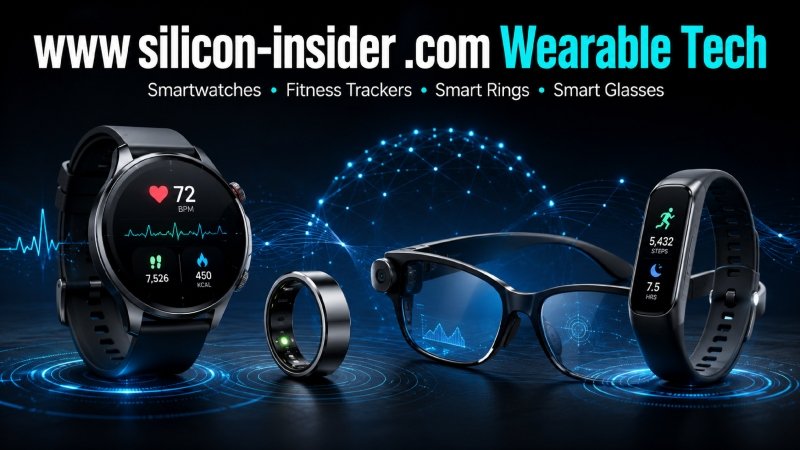
Wearable technology is changing how people interact with digital devices, monitor personal activities, and access information throughout the day. Smartwatches, fitness trackers, smart rings, and intelligent glasses now combine compact hardware, sensors, wireless connectivity, and software to deliver convenient digital experiences.
The growing interest in www silicon-insider .com wearable tech reflects a desire to understand these innovations and discover how connected devices fit into modern life. From everyday fitness tracking to specialized healthcare monitoring, wearable products offer different capabilities for consumers and businesses.
Silicon Insider’s wearable technology topic provides an entry point for exploring this developing area of consumer electronics. However, readers should distinguish an informational technology publication from an actual device manufacturer or wearable technology service.
This guide explores the major device categories, how wearable systems work, emerging innovations, practical applications, purchasing considerations, and security risks. It also explains how to evaluate technology information before making important decisions.
What Is Silicon Insider Wearable Tech?
Silicon Insider wearable tech refers to wearable technology as a subject within consumer electronics and digital innovation. It includes information about electronic products designed to be worn on the body and used for communication, activity monitoring, or other digital functions.
These devices combine physical components with software to collect information and perform specific tasks.
For example, a smartwatch can display smartphone notifications, record exercise sessions, and measure selected health indicators. A smart ring may collect sleep and activity information, while smart glasses can provide hands-free communication.
The subject includes established products alongside developing technologies involving artificial intelligence, advanced sensors, and connected applications.
Readers should use technology articles as research starting points. Product specifications, medical capabilities, prices, and compatibility should always be checked against current manufacturer documentation and independent testing.
Main Types of Wearable Technology
Different wearable products serve different purposes. Understanding their capabilities helps consumers identify suitable options.
1. Smartwatches
Smartwatches combine traditional timekeeping with smartphone connectivity and activity-monitoring features.
Depending on the model, users can receive messages, answer calls, access navigation, record workouts, and monitor selected health measurements.
Important features include:
- Heart-rate monitoring and activity tracking.
- GPS-supported workout recording.
- Sleep estimates and exercise summaries.
- Calendar reminders and notifications.
- Contactless payments on supported devices.
- Integration with compatible smartphone applications.
Battery life, operating-system compatibility, display quality, and available applications should influence purchasing decisions.
2. Fitness Trackers
Fitness trackers focus on physical activity and daily movement. Their lightweight designs appeal to people who want straightforward monitoring without purchasing a full smartwatch.
| Feature | Practical purpose |
|---|---|
| Step counter | Records daily movement |
| Exercise modes | Tracks supported workouts |
| Sleep tracking | Estimates sleep duration and patterns |
| Heart-rate sensor | Measures pulse-related signals |
| Activity reminders | Encourages regular movement |
| Companion app | Organizes measurements and trends |
These devices can help people develop consistent exercise habits. However, sensor readings are estimates and should not be interpreted as medical diagnoses.
3. Smart Rings
Smart rings place electronic components inside a compact wearable design. Depending on the model, they can track movement, sleep patterns, and selected physiological measurements.
Their discreet appearance makes them attractive to users who dislike wearing watches.
Before purchasing one, examine ring sizing, battery life, smartphone compatibility, charging arrangements, and subscription requirements.
One limitation is their restricted physical interface. Most models depend on companion applications because their compact construction leaves little room for screens and controls.
4. Smart Glasses
Smart glasses combine eyewear with electronic components such as cameras, microphones, speakers, and digital displays.
Some products provide audio playback, voice assistance, photography, and hands-free communication. More advanced models may support augmented reality experiences.
They can be useful for navigation, communication, entertainment, and certain workplace activities.
However, camera-equipped glasses introduce additional privacy considerations. Users should follow applicable recording laws and respect other people’s privacy.
5. Health Monitoring Wearables
Health-monitoring devices collect selected physiological measurements for personal wellness or specific medical purposes.
Examples include heart-rate monitors, activity sensors, sleep-monitoring devices, and continuous glucose monitors.
Not every health-related wearable has the same capabilities or regulatory status. Consumers should check the intended purpose, accuracy information, and relevant approvals before relying on medical measurements.
How Wearable Technology Works
Wearable devices combine hardware, software, batteries, and wireless communication. Each component performs a different function.
Sensors Collect Information
Sensors measure physical movement, temperature, orientation, and selected physiological signals. Accelerometers and gyroscopes help identify movement. Optical sensors can estimate pulse-related information, while GPS receivers support location-based activities.
Processors Interpret Measurements
A device’s processor handles collected information and applies software calculations. For example, movement readings can help estimate steps or identify exercise activities. The results depend on sensor quality and the algorithms used.
Applications Display Results
Companion applications organize measurements into charts, reports, notifications, and activity summaries. Some products perform most processing locally, while others transfer selected information to connected smartphones or remote services.
Wireless Connectivity Transfers Data
Bluetooth commonly connects wearable devices to nearby smartphones. Wi-Fi and cellular connections support additional functions on compatible products.
Connectivity affects synchronization, notifications, remote access, and certain advanced services.
Batteries Power the System
Rechargeable batteries supply energy to sensors, processors, screens, and wireless components.
Screen brightness, continuous tracking, GPS usage, and software activity can affect battery performance.
How Artificial Intelligence Is Improving Wearables
Artificial intelligence is introducing more advanced ways to interpret information collected by connected devices. Traditional wearables mainly display individual measurements. AI-enabled systems can analyze patterns and organize information into more contextual summaries.
For example, compatible applications may compare movement records and sleep estimates to help users understand changes in their routines. Two processing approaches are particularly important.
Edge AI processes selected information directly on a compatible device. This can improve responsiveness and reduce dependence on remote servers for supported functions.
Cloud AI uses remote computing resources to perform more demanding processing tasks. It can support advanced services but may require internet connectivity and additional data transfers.
Neither approach guarantees accurate results. Users should examine how recommendations are generated and whether sensitive information is shared with external services.
Benefits of Wearable Technology in Everyday Life
- Wearables can provide practical benefits when their features match individual requirements.
- Fitness awareness: Activity records help users review daily movement and exercise patterns.
- Convenient communication: Smartwatches and compatible accessories provide notifications and selected communication functions.
- Personal organization: Reminders, calendars, timers, and alerts support everyday routines.
- Health-related insights: Certain devices provide useful measurements for personal wellness monitoring.
- Hands-free interaction: Smart glasses and connected audio devices allow selected tasks without holding a smartphone.
- Workplace assistance: Specialized products can provide operational information and support certain industrial activities.
- The value of these features depends on comfort, reliability, software quality, and appropriate use.
Latest Wearable Technology Trends
The wearable market continues to develop as manufacturers improve hardware, software, and connectivity.
| Technology trend | Potential application | Important limitation |
|---|---|---|
| AI-powered devices | Intelligent assistance | Privacy and accuracy |
| Advanced sensors | More detailed measurements | Validation requirements |
| Smart glasses | Hands-free digital access | Battery and recording concerns |
| Smart rings | Compact monitoring | Limited interaction |
| Connected ecosystems | Device synchronization | Compatibility |
| Efficient processors | Improved energy management | Model-dependent performance |
Another important development is interoperability. Consumers increasingly expect different devices and applications to exchange selected information.
However, compatibility remains dependent on manufacturer support, software standards, and operating systems.
How Businesses Can Use Wearable Technology
Wearable devices have applications beyond consumer electronics. In warehouses, wearable scanners can help workers identify products and update inventory records. In industrial environments, compatible devices may provide equipment instructions and operational alerts.
Healthcare organizations can explore appropriate monitoring systems for specific clinical purposes, subject to relevant requirements. Businesses should evaluate these products carefully before introducing them into everyday operations. Important considerations include employee privacy, device management, network security, maintenance, training, and compatibility with existing systems.
Organizations should establish clear policies explaining what information is collected, why it is needed, and who can access it.
How to Choose the Right Wearable Device
The best device is not necessarily the most expensive or feature-rich option. It should solve a genuine problem.
Use these purchasing considerations:
- Define your purpose: Decide whether you need fitness tracking, communication, wellness monitoring, or workplace functionality.
- Check compatibility: Confirm that the product supports your smartphone and operating system.
- Compare battery life: Consider real-world usage rather than relying exclusively on advertised estimates.
- Evaluate comfort: Check weight, materials, sizing, and everyday wearability.
- Review sensor capabilities: Understand which measurements are available and their limitations.
- Calculate total costs: Include subscriptions, accessories, repairs, and replacement expenses.
- Check software support: Investigate update policies and long-term application availability.
- Read independent reviews: Look for practical testing and documented performance.
A fitness tracker may suit someone interested in basic activity records. A smartwatch may offer more convenient communication, while smart rings and glasses serve different preferences.
Privacy and Security: What Users Should Know
Wearables may collect sensitive information involving movement, sleep, location, communication, and selected physiological measurements.
This information can travel between the device, smartphone applications, and remote services.
Users should understand how their data is stored, processed, shared, and deleted.
Warning Signs to Avoid
- Applications request unnecessary permissions.
- Manufacturers provide unclear privacy policies.
- Devices lack transparent security-update information.
- Sellers make unsupported health or performance claims.
- Products have unclear ownership or warranty details.
- Applications provide no understandable data-management controls.
Practical Security Best Practices
Individual users should activate strong passwords and multifactor authentication when available. They should review application permissions, install official updates, and disable unnecessary camera, microphone, or location access.
Technical teams should implement encryption, access controls, device-management procedures, and incident-response policies.
Organizations should also establish clear employee-monitoring rules and avoid collecting information that is unnecessary for legitimate operational purposes.
Is Silicon Insider Wearable Tech Worth Reading?
Technology publications can help readers discover new products, understand technical concepts, and follow developments in consumer electronics.
The value of a particular article depends on its accuracy, transparency, depth, and supporting evidence.
Readers should examine publication dates, editorial information, references, and whether product claims are supported by reliable documentation.
For purchasing decisions, manufacturer specifications and independent product testing provide additional verification.
For medical questions, consult qualified healthcare professionals and reliable clinical sources rather than relying exclusively on general technology articles.
A useful technology guide should explain both advantages and limitations instead of presenting every new feature as a breakthrough.
Frequently Asked Questions
1. What does www silicon-insider .com wearable tech cover?
It relates to wearable technology information, including smartwatches, fitness trackers, smart rings, smart glasses, connected applications, and developments in consumer electronics.
2. Which wearable device is best for beginners?
A basic fitness tracker or entry-level smartwatch may suit beginners. The right option depends on budget, smartphone compatibility, comfort, and preferred features.
3. Can wearable devices provide accurate health information?
Some devices provide useful measurements, but accuracy varies by product and measurement type. Consumer wellness readings should not automatically be treated as medical results.
4. How does AI improve wearable technology?
AI can analyze selected sensor information, recognize patterns, and provide contextual assistance. Its performance depends on data quality, processing capabilities, and software design.
5. Are wearable devices safe for personal information?
They can be used responsibly, but users should review privacy policies, permissions, account security, and data-sharing practices before connecting devices.
6. What should businesses consider before adopting wearables?
Organizations should evaluate security, compatibility, employee privacy, maintenance, training, operational value, and information-management requirements.
Conclusion
Wearable technology continues to expand across personal fitness, communication, healthcare, entertainment, and industrial operations. Smartwatches, fitness trackers, smart rings, and smart glasses offer different capabilities, but their usefulness depends on individual requirements and responsible implementation.
Understanding www silicon-insider .com wearable tech means exploring more than device specifications. Readers should examine how connected products operate, what information they collect, and whether their features provide genuine value.
For individuals, careful product comparisons and privacy awareness are essential. For technical teams, secure deployment, employee transparency, and ongoing maintenance should remain priorities.
Before purchasing or adopting any wearable device, verify its specifications, investigate its manufacturer, review its privacy practices, and understand its limitations. The best technology is not simply the newest product; it is the one that delivers practical value without compromising security or personal control.
Visit Trave Tweaks Hotels for more releated topics.